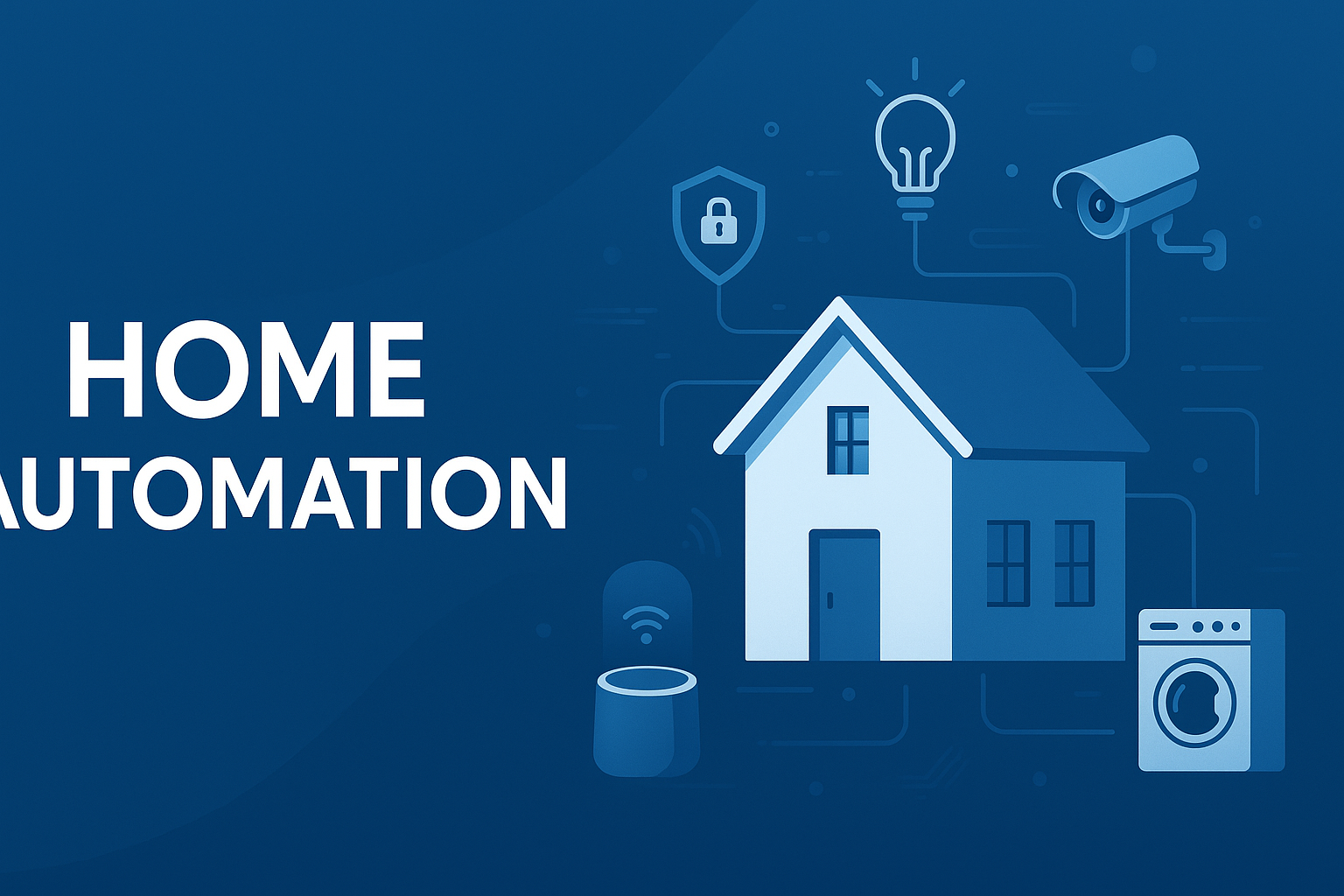
Home automation refers to the use of technology to control, monitor, and automate various household functions and devices, often through a central system or remotely via smartphones, tablets, or computers. It enables the integration and automatic management of lighting, heating, cooling, security, entertainment, appliances, and more, often referred to as a “smart home.”
Benefits of Home Automation
-
Convenience:
-
Control devices remotely (lights, thermostats, security, etc.)
-
Schedule tasks (e.g., lights on at sunset, coffee maker at 7 AM)
-
-
Energy Efficiency:
-
Optimize heating/cooling schedules
-
Turn off unused devices automatically
-
Monitor and reduce energy usage
-
-
Enhanced Security:
-
Remote surveillance (CCTV, smart locks)
-
Automated door locking and motion sensors
-
Real-time alerts and alarms
-
-
Comfort & Personalization:
-
Adjust lighting, temperature, and music to preferences
-
Create customized scenes (e.g., “movie night”)
-
-
Accessibility:
-
Assistive features for elderly or disabled (voice control, automation)
-
-
Cost Savings:
-
Lower utility bills through smarter energy usage
-
Prevent damage (e.g., water leak sensors)
-
Common Use Cases of Home Automation
-
Smart Lighting:
Automated lighting schedules, motion-activated lights, color-changing bulbs. -
Climate Control:
Smart thermostats, remote AC control, automated blinds/shades. -
Security Systems:
Smart locks, video doorbells, motion detectors, alarm systems, surveillance cameras. -
Appliance Control:
Smart plugs/switches for fans, coffee machines, washing machines, etc. -
Entertainment:
Multi-room audio, smart TVs, voice-activated media control. -
Irrigation:
Automated garden sprinklers based on weather data. -
Health & Wellness:
Air quality monitoring, sleep trackers, water leak/flood detectors.